
TL;DR
LinkedIn’s algorithm changed, and low-effort content is getting buried.
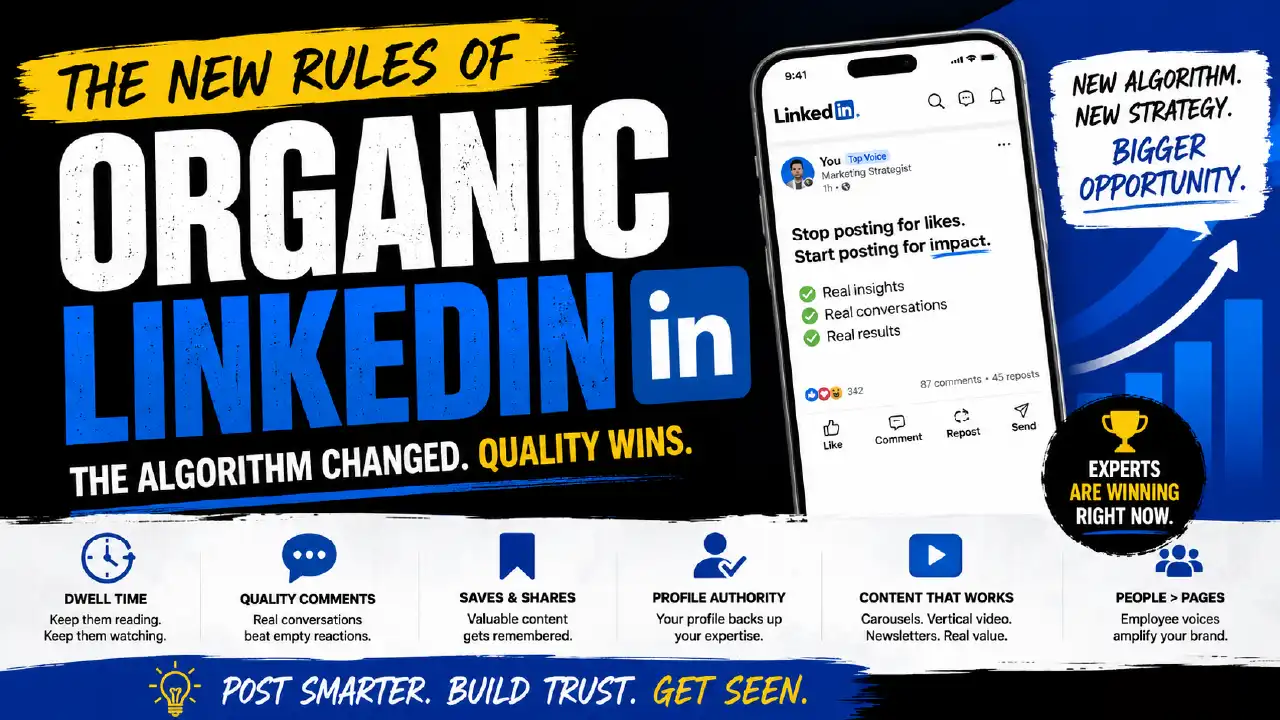
The platform now prioritizes dwell time, expertise, real conversations, saves, and content that sounds genuinely human.
This article breaks down what is actually working right now:
- document carousels
- vertical video
- newsletter strategy
- employee-generated content
- and how to stop sounding like AI oatmeal
LinkedIn is no longer rewarding whoever posts the most. It is rewarding whoever is worth paying attention to.
Your LinkedIn reach dropped.
You noticed.
You posted again.
It dropped again.
Fun little nightmare, right?
But you’re not imagining it. LinkedIn has changed. The platform is no longer rewarding random engagement confetti the way it used to. It is looking for something much harder to fake: actual relevance.
Earlier this year, LinkedIn introduced a new AI-driven ranking system called 360Brew. This system does not just count engagement. It reads behavior. It studies how long people pause on your post, whether your comments create real conversation, whether people save your content, and whether your profile backs up what you claim to know.
This is not 2023 LinkedIn.
It is not even 2024 LinkedIn.
The bar got higher. The noise got louder. And the opportunity for people who actually know what they are talking about got much, much bigger.
From Reach to Resonance
The old LinkedIn had one job: reward whoever posted the most and collected the most likes.
The new LinkedIn has a different job: figure out who is actually worth reading.
That means the algorithm now cares about signals like:
- Dwell time
- Comment quality
- Saves
- Conversation depth
- Profile authority
- Topic consistency
Translation: a post with 12 thoughtful comments from people in your industry can now beat a post with 200 likes and zero substance.
You are not writing for the quick like anymore.
You are writing for the bookmark. The screenshot. The “I’m sending this to my team” direct message.
That is the game now.
Dwell Time Is the New Currency
LinkedIn now pays close attention to how long someone stops on your content before scrolling away.
That means your hook matters. Your formatting matters. Your visuals matter. Your actual point definitely matters.
The question is no longer:
“Can I get someone to react?”
The question is:
“Can I make someone pause?”
Because a pause is the first domino.
A pause can lead to a save. A save can lead to a share. A share can lead to a conversation. A conversation can lead to trust. Trust can lead to pipeline.
And pipeline, unlike likes, pays invoices.
The AI Content Problem
Everyone started using AI to write LinkedIn posts.
And LinkedIn noticed.
360Brew reportedly analyzes lexical diversity, writing patterns, and content originality. In normal human language, that means LinkedIn is getting better at spotting generic AI-generated sludge.
You know the posts.
They sound polished. Confident. Structured. Empty.
Like a TED Talk written by a microwave.
The problem is not using AI. The problem is removing every trace of actual human perspective.
Use AI to draft. Use it to organize. Use it to get unstuck.
But before you publish, ask one question:
Does this sound like something only I could have written?
If the answer is no, edit it until it does.
Your Profile Is Now Part of Your Content Strategy
This one catches people off guard.
LinkedIn does not just evaluate your post in isolation. It also looks at whether your profile supports the topic you are posting about.
If your profile shows years of experience in B2B sales and you post about sales strategy, that makes sense.
If your profile says “graphic designer” and suddenly you are posting daily hot takes about enterprise revenue operations because the algorithm looked hungry, LinkedIn may not trust it.
And honestly, neither should we.
The platform is building an expertise graph around your account over time. The clearer your lane, the easier it is for LinkedIn to understand who should see your content.
So pick two or three content pillars that connect directly to what you actually know.
Not what sounds cool.
Not what is trending.
What you have receipts for.
The specialists are winning right now.
Company Pages Still Matter, But They Cannot Carry the Whole Strategy
Company pages are still useful. They give your brand credibility, a home base, and a place to anchor your content ecosystem.
But they are not enough.
LinkedIn is increasingly a people-first distribution network. Personal profiles dramatically outperform company pages because people trust people faster than they trust logos.
That means your executives, team leaders, strategists, operators, and subject matter experts are not just employees.
They are distribution channels.
Beautiful little content cannons, if you will.
The smartest companies are not choosing between personal profiles and company pages. They are building both together.
- The company page creates brand consistency.
- The team creates reach.
- The executives create trust.
- The content system keeps everything from turning into random acts of posting.
Employee-generated content is no longer a cute bonus.
It is infrastructure.
What Is Actually Working on LinkedIn Right Now?
Let’s get tactical.
Because theory is nice, but execution is where the money hides.
1. Document Carousels
Document carousels are still one of the strongest formats on LinkedIn.
They create dwell time. They encourage saves. They keep people swiping.
And every swipe tells LinkedIn, “Hey, this person is still here.”
That is exactly the signal the algorithm wants.
2. Vertical 800x999 Images
Vertical images are wildly underrated.
They take up more mobile feed space, which gives your content more room to stop the scroll.
More screen space means more attention opportunity.
Pair a strong visual with a punchy hook and you have a very simple, very effective LinkedIn asset.
3. Short Vertical Video
LinkedIn is pushing harder into mobile video.
Short educational videos under 90 seconds can perform extremely well when they are clear, useful, and front-loaded with a strong hook.
The formula is simple:
- Keep it short
- Add captions
- Hook viewers in the first three seconds
- Teach one useful thing
- Get out before you become boring
Production quality can be low.
The quality of the idea cannot.
4. LinkedIn Newsletters
LinkedIn Newsletters are one of the biggest underused opportunities on the platform.
They can trigger email notifications, push notifications, and Google indexing.
That means you are not completely dependent on the feed algorithm every time you publish.
That is the difference between renting attention and building audience equity.
How Often Should You Post?
More is not always better.
Posting too often can cause your own content to compete against itself before it has had time to fully circulate.
For most professionals and brands, three to four strong posts per week is a smart target.
Not five forgettable posts.
Not fourteen recycled “leadership lessons” from someone who just discovered bullet points.
Three to four strong posts.
Let them breathe.
What About Links?
Direct links in the body of a LinkedIn post can still hurt reach.
That does not mean you should avoid links forever like they owe you money.
A common workaround is:
- Publish the post without the link.
- Wait about 10 minutes.
- Edit the post.
- Add the link after publishing.
LinkedIn tends to evaluate the post heavily at the moment it goes live, so this gives your content a better chance to get initial distribution before the link enters the chat.
The Big Takeaway
LinkedIn is not dead.
Lazy content is.
The platform is shifting toward authority, depth, expertise, and actual conversation.
Which is fantastic news if you have something real to say.
The brands winning now are not just posting more. They are building better content systems around real expertise.
They are turning leaders into voices. Teams into amplifiers. Company pages into credibility hubs. Newsletters into owned audience channels.
That is the move.
Not louder.
Sharper.
Want Better LinkedIn Reach Without Posting Like a Robot?
Vicar Creative helps brands build content systems that turn expertise into attention, attention into trust, and trust into pipeline.
Because “we should post more” is not a strategy.
It is a cry for help with a content calendar attached.
Subscribe to the Vicar Creative Newsletter for sharper takes on content strategy, audience growth, AI-driven marketing, and how to avoid becoming invisible online.